Design that treats people well and still hits the numbers.
Most designers pick a side — the user's champion or the business's soldier. I've
never understood the split. I'm Kyendereta, a senior product designer in Nairobi, and I do both.
Deliberately.
Shipping real products — dating apps, legal brands, community platforms
3,400+
Designers across Africa in the community I founded
80+
Podcast episodes of honest design conversation
Lead
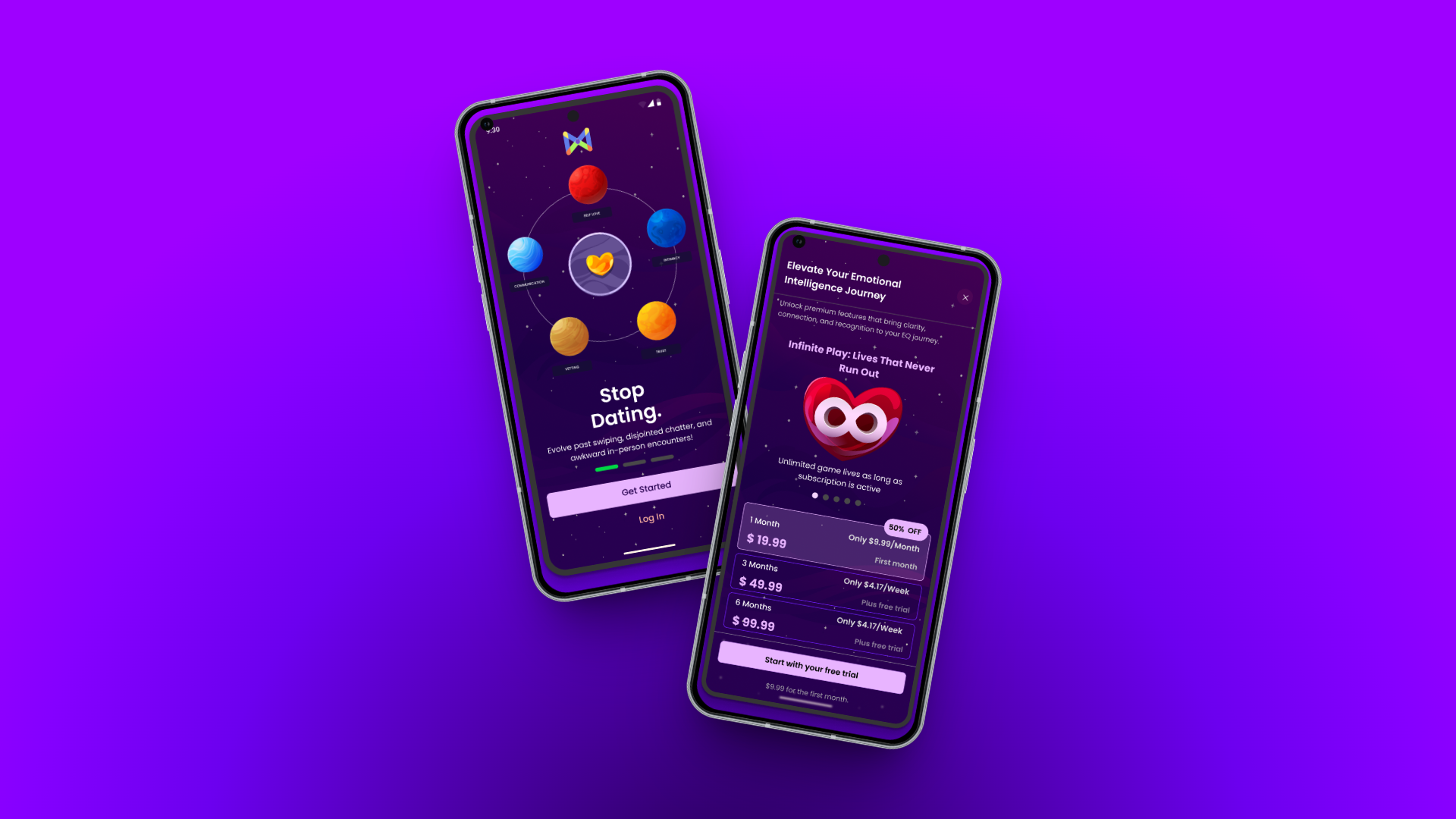
Product Designer at Meetamore, an EQ-based dating app
The work
Some things I've made.
I've kept this short on purpose. A few projects, told properly, instead of twenty thumbnails you'll
never click. Where a project was a concept rather than a shipped product, I say so.
Shipped product · Lead Product Designer
Designing for emotional intelligence in a swipe-fatigued market
A dating app built on EQ instead of appearance-first matching. Research into real human
behaviour, translated into an interface people trust with something as fragile as connection.
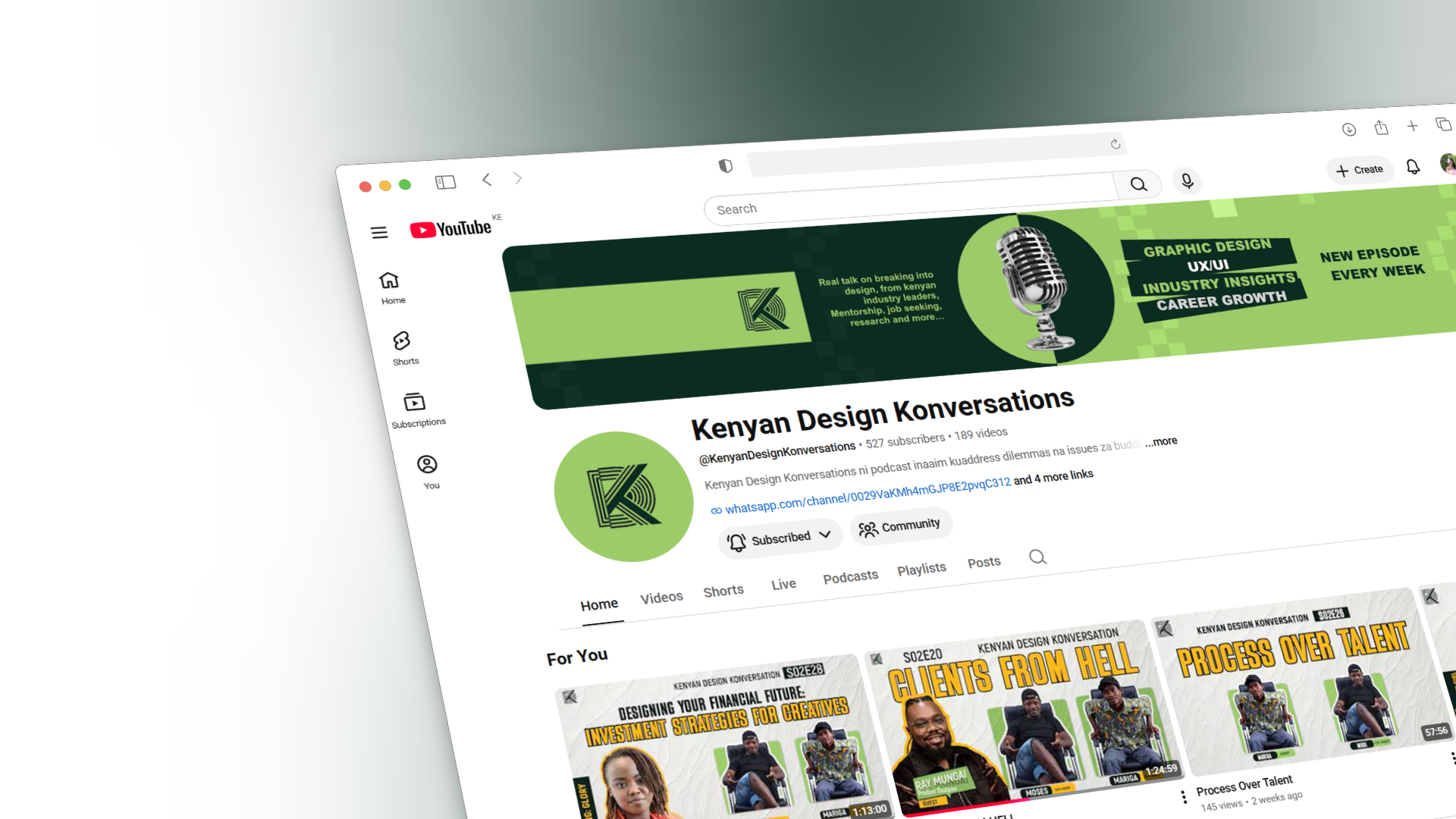
Kenyan Design Konversations: building the mentorship I couldn't find
I needed honest design mentorship and it didn't exist — so I built it. A podcast and community
that grew to 3,400+ designers across Africa. Product thinking at human scale, sustained over
years.
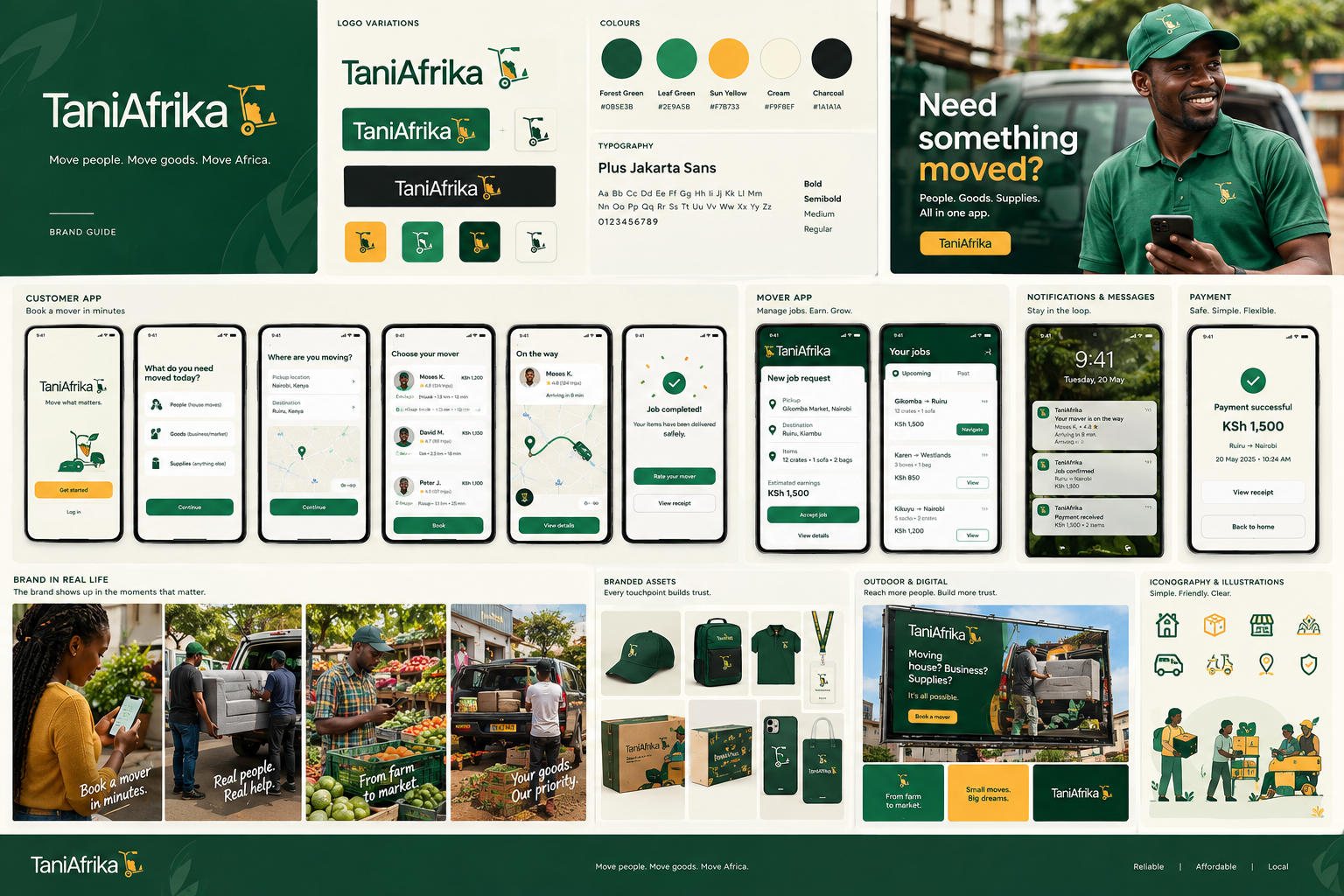
A two-sided trucking marketplace, designed trust-first
On-demand truck hire for Kenyans moving house. The pitch said no competition. The real rival was
the estate WhatsApp group, and that one reframing set the entire brief.
We design for users. True. But that's half the job.
Nobody tells designers from the word go that we're doing this for the business too. So we learn the skill
without learning what it's for, and we fumble. We can't sell ourselves because we don't know what we bring
to the table — and somewhere out there a designer is charging five thousand shillings for a website,
training a whole market not to know the worth of design. Not here. Empathy is still my infrastructure —
understand the person deeply enough and the business results stop being a separate conversation. But be
clear about what you're buying. Results.
About
I got here the long way.
Nobody handed me this career. When I was starting out I went looking for mentorship — someone a few
steps ahead who would tell me the truth about the work — and I couldn't find it. Not in my city, not
in any form I could reach. Courses taught tools. What I needed was conversation.
So I made it myself. In late 2023 I started recording candid conversations with designers
further along than me and putting them out there. That became Kenyan Design Konversations — 3,400+
designers across Africa now, 80+ episodes, a team, systems, a live event. Built from a gap I lived
inside.
Notice what's missing. Understand why. Build the answer. Then keep showing up for it.
Here's the thing I had to learn the hard way, and the thing I'll argue about anywhere: we're taught
that we design for users. True. But nobody tells us we're doing this for the business too. So we
learn the skill without knowing what it's for, we fumble, we can't sell ourselves — and then someone
charges five thousand shillings for a website. That's not humility. That's a designer who was never
told their worth, training clients not to know it either. I design for the person using the
product and the business paying for it, and I can tell you exactly what you're getting for the
money. That's the whole job.
I live and work in Nairobi. Kenyans call it shamba la mawe — a stone farm. Money doesn't
grow easy here. But every event I wanted to attend, every opportunity I kept seeing — the location
was always Nairobi. So I moved, and I adapted. You learn how to talk to people, how to be around
people. It's a skill like any other, and it's mine now.
I'm self-taught, with a Google UX Design Certificate somewhere in a drawer, still learning in public
— the community makes sure of that. These days I'm building toward a picture I can see clearly even
if I can't fully describe it yet: the designer known for bringing results, the house in my head, and
being the person who mentored somebody — even informally. Especially informally.
What people say
In their words.
"Chantelle has a unique ability to translate complex user needs and business requirements into
intuitive, elegant interfaces. Her attention to detail during wireframe handoffs made our
engineering team's work incredibly smooth. Any team would be lucky to have such a thoughtful and
user-centric designer."
— Frank Nwankwo, Product Manager, Meetamore
"She was our first design hire, and her impact on the company went far beyond simply making
screens look good. She helped us define the product itself… Her work elevated the quality of the
product to a point where investors and stakeholders could clearly see the vision becoming real.
That directly helped us build momentum and secure additional funding."
— Isaak Hayes, Founding team, Meetamore
"KDK was the first to truly believe in me… not just as a writer, but as an emerging industry
leader. That trust meant everything. It's been more than a collaboration — it's been a
partnership rooted in mutual respect and shared vision."
"KDK has been such a game-changer for me! I've learned so many practical design principles from
the community, which honestly helped in my design workflow. If you want an amazing and
supportive creative space to level up, KDK is the place to be."
— Immaculate, designer & KDK member
Say hello
Start with the problem.
I'm open to select senior product design roles, consulting on research-led product work, and conversations that
begin with "we have this problem" rather than "we need some screens." I read everything. If it's a real
problem, I'll reply properly.